
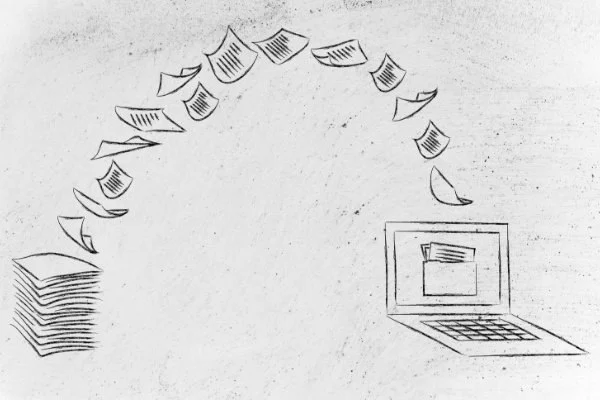
At first glance, paper-based processes seem harmless. A few files here, some registers there, spreadsheets printed and signed, it feels familiar, affordable, and “good enough.”
But beneath this comfort lies a growing, invisible cost that quietly slows your business down.
If your business still relies heavily on paper, this blog is for you.
Time Is Your Biggest Loss (And You Don’t See It)
Paper doesn’t just sit in files, it consumes time.
- Searching for documents
- Manually copying data from one sheet to another
- Physically moving files between teams
- Waiting for approvals because someone isn’t in office
Each task may take only minutes, but multiplied across teams, days, and months, the loss is massive.
What feels like “how work gets done” is actually work getting delayed.
Errors Become Inevitable
Humans make mistakes, paper makes them permanent.
- Illegible handwriting
- Missed entries
- Duplicate records
- Incorrect calculations
- Lost or outdated versions of documents
These errors don’t just stay on paper. They affect:
- Billing
- Compliance
- Customer experience
- Internal decision-making
Fixing mistakes later always costs more than preventing them early.
No Real-Time Visibility = Poor Decisions
When data lives on paper:
- You can’t see performance in real time
- Reports take days (or weeks) to compile
- Decisions are based on gut, not facts
Business leaders need answers like:
- Where are we losing money?
- Which process is slow?
- Which customer needs attention today?
Paper can’t answer these questions fast enough, if at all.
Scaling Becomes Painful
Paper might work when:
- You have 5 employees
- You handle limited customers
- Operations are simple
But growth exposes its cracks.
As you scale:
- Files increase exponentially
- Coordination becomes chaotic
- Onboarding new staff takes longer
- Processes break under pressure
Instead of supporting growth, paper actively resists it.
Hidden Financial Costs Add Up
Paper feels cheap, but it isn’t.
Consider the real costs:
- Printing, storage, and stationery
- Office space used just for files
- Employee hours spent on non-value work
- Delays causing lost revenue
- Rework due to errors
These costs rarely show up clearly in accounting, but they quietly drain profitability.
Customer Experience Suffers
Customers expect speed and clarity.
Paper-based operations often lead to:
- Delayed responses
- Repeated requests for the same information
- Inconsistent communication
- Missed follow-ups
Your customer doesn’t see your internal process, they only feel the friction.
And friction leads to churn.
Compliance & Risk Exposure Increase
Paper is fragile:
- Files can be lost, damaged, or misused
- Access control is weak
- Audit trails are incomplete
As regulations increase, paper-based systems struggle to keep up, putting your business at legal and financial risk.
The Real Question Isn’t “Why Change?”
It’s “Why Not?”
Moving away from paper isn’t about going “high-tech.”
It’s about:
- Saving time
- Reducing errors
- Gaining clarity
- Scaling confidently
Modern businesses don’t digitize for trends—they digitize to survive and grow.
Final Thought
Paper hides problems.
Digital systems expose them—and fix them.
If your business still runs on paper, the cost isn’t just operational.
It’s opportunity cost, the growth, efficiency, and clarity you’re missing every single day.